Turning Global Health Guidelines into Real Care: Lessons from the GUIDE Study Meeting in Geneva
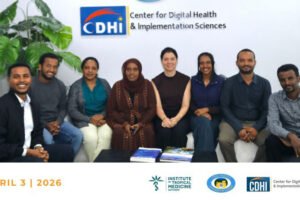
From December 10–12, 2025 in Geneva, experts from Ethiopia, Ghana, and the World Health Organization spent three productive days working on the GUIDE study – a long-term project examining how WHO’s Digital Adaptation Kits (DAKs) can be integrated into national digital health systems to improve the quality of care, particularly in resource-limited settings. The study, running from 2022 through September 2025, explores whether embedding DAKs within existing digital platforms – Bahmni EMR in Ethiopia and DHIS2 Tracker (eTracker) in Ghana – can enhance antenatal care, family planning, and HIV services.
Our collaborative work, Implementation of WHO SMART Guidelines – DAKs in Pathfinder Countries in Africa (JMIR Medical Informatics, 2025), and the GUIDE Study/DAK Implementation Research published in Health Policy and Systems Research (2025), provide further detail and highlight how DAKs are shaping the future of digital health in Africa.
During the Geneva meeting, participants:
– Reviewed baseline and endline data from Ethiopia and Ghana
– Compared findings across countries and health system contexts
– Refined the design of upcoming impact evaluation papers
– Discussed lessons learned and challenges related to adapting DAK content to national clinical guidelines, aligning digital workflows with health workers’ daily routines, and navigating system limitations under WHO guidance.
DAKs translate WHO guidelines into structured digital tools using international terminology standards such as ICD and SNOMED to support consistent care delivery across facilities. They are designed to integrate effectively with existing systems, reducing errors from manual guideline interpretation and simplifying monitoring and evaluation.
The meeting underscored the importance of country ownership, active stakeholder engagement, and open reflection on both successes and challenges. These insights offer practical lessons for other countries adopting WHO’s SMART Guidelines. Preliminary results from the GUIDE study are expected in 2026 and may inform broader adoption across Africa and beyond.